Abstract
Precision welding tasks such as MIG and TIG operations demand hand protection that balances thermal resistance, tactile sensitivity and mechanical durability, and Russet Mig Tig Welding Gloves are engineered to meet the complex demands of professional welding workshops, fabrication sites and outdoor welding assignments. This article explores raw‑leather material characteristics, core protective performance indexes, ergonomic design principles, practical on‑job usage scenarios, proper selection criteria, daily handling guidance and common wear‑mode analysis. Welders, workshop supervisors and safety technicians can obtain systematic technical references for protective‑glove grade evaluation, correct usage and service‑life management. All content focuses on material performance, human‑factor engineering and field‑safety practice without commercial‑value descriptions. Key test indicators and troubleshooting suggestions are covered to support stable hand‑protection performance across varied welding‑working surroundings.
Table of Contents — Click to jump to each section
- 1. Raw‑Leather Material Properties and Core Protective Logic
- 2. Key Performance Indexes For Welding‑Hand‑Protection Evaluation
- 3. Ergonomic Structure Design and Seam‑Construction Details
- 4. Typical Working Scenarios and Corresponding Protection Requirements
- 5. Correct On‑Site Usage Habits and Operational Precautions
- 6. Wear‑Mechanism Analysis and Scientific Maintenance Protocols
- 7. Frequently Asked Technical Questions
- 8. Access Additional Technical Documentation and Professional Guidance
1. Raw‑Leather Material Properties and Core Protective Logic
Features of russet leather substrate for welding protective gear
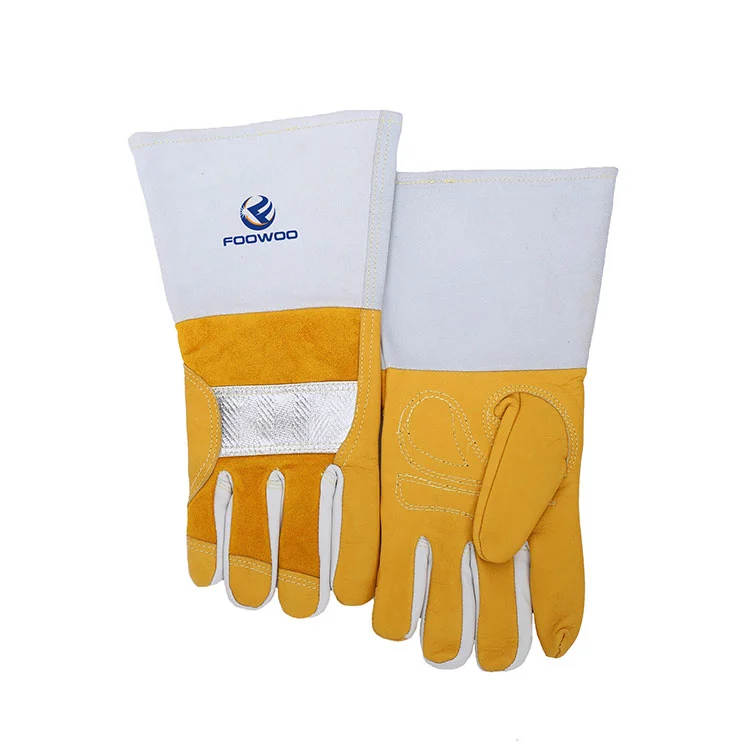
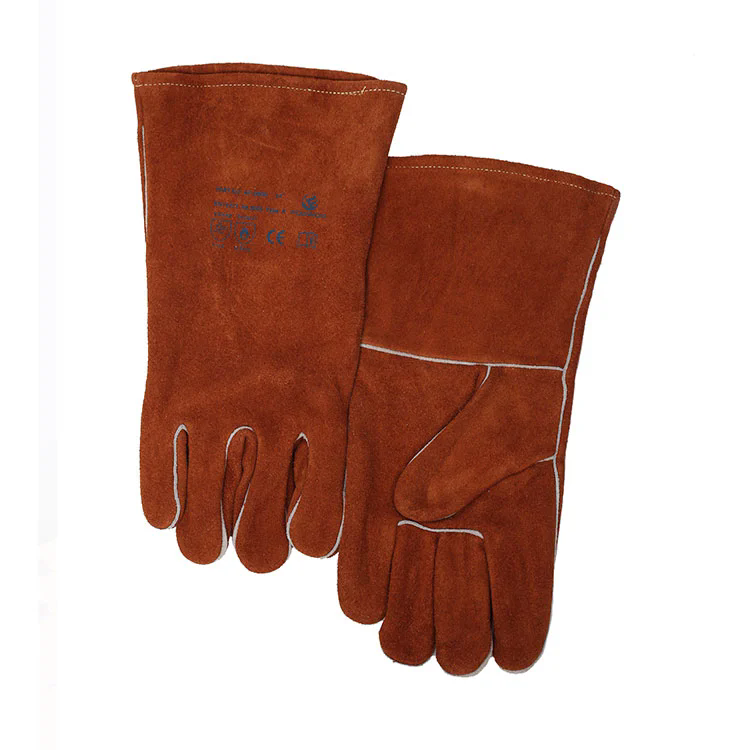
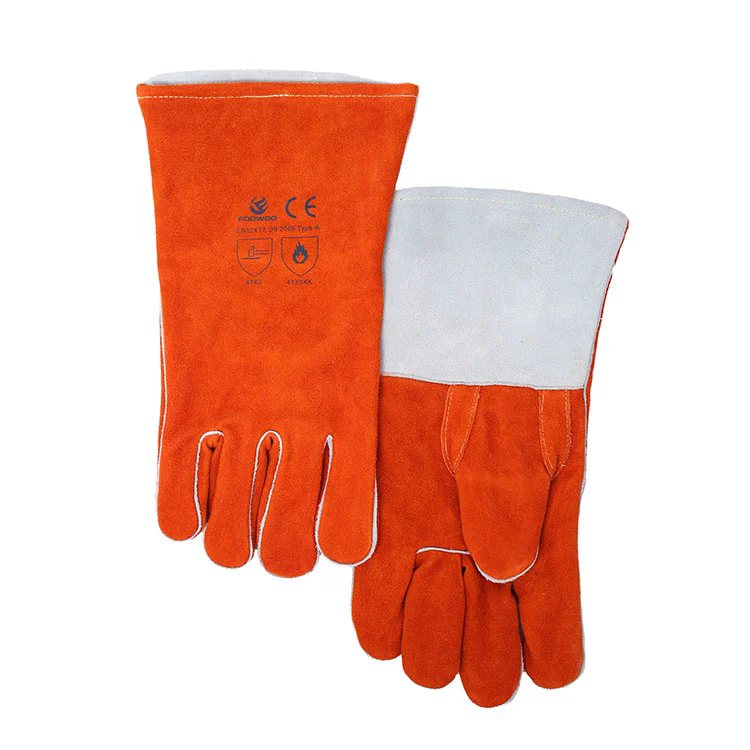
High‑quality split cowhide serves as the primary substrate for professional welding hand gear. Russet‑toned leather retains natural fibre structures that deliver heat‑blocking capability, spark‑resistant performance and tear‑resistance under harsh workshop conditions. Different leather‑tanning processes directly influence final mechanical strength, high‑temperature stability and surface‑abrasion endurance.
Tanning treatment adjusts fibre density and surface characteristics. Poorly tanned leather will harden rapidly under repeated thermal radiation and spatter exposure, losing flexible deformation capacity. Well‑processed leather maintains soft texture after long‑time contact with high‑temperature environmental sources, which supports continuous hand‑joint movement during welding procedures.
Two‑layer composite structural logic supports overall protective capability: outer leather barrier and inner comfort lining. The outer leather layer undertakes spark impact, radiant heat, sharp‑object scratching and surface abrasion. Inner lining material improves wearing comfort, absorbs hand sweat and slows down heat conduction toward skin tissue. Once outer‑layer leather suffers burn‑through or deep tearing, the whole protective system loses core‑defence capacity.
Welding‑spatter resistance represents the most critical material‑performance requirement. Molten metal droplets splash onto glove surfaces during MIG and TIG welding workflows. Qualified leather material can resist instantaneous high‑temperature impact and avoid immediate penetration. Fibre‑layer damage will accumulate after repeated spatter strikes, forming tiny brittle burn spots that gradually expand into holes.
- Thermal‑radiation shielding: dense natural‑leather fibre structure blocks large portions of welding‑arc radiant heat
- Spatter‑impact tolerance: high‑quality russet leather withstands short‑time molten‑metal‑droplet contact
- Tear‑resistance attribute: compact fibre layout resists cutting force from sharp metal burrs and workpiece edges
- Flexibility retention: proper tanning technology keeps leather pliable under long‑duration high‑temperature exposure
Work‑environment humidity brings complex influences to leather‑material status. Excessively humid workshop atmosphere makes leather absorb moisture, which reduces surface‑spatter‑resistance performance. Long‑term extremely dry surroundings cause leather fibre dehydration, generating surface cracking risk. Maintaining moderate storage‑environment humidity helps preserve original material‑property standards.
Russet Mig Tig Welding Gloves deliver reliable hand‑defence performance built upon qualified leather‑substrate quality and standardized tanning‑processing technology. Understanding material‑failure modes helps technical teams set reasonable replacement cycles for protective hand‑gear inside welding‑workshop environments.
2. Key Performance Indexes For Welding‑Hand‑Protection Evaluation
Multiple test‑standard indexes define comprehensive protective‑gear performance. Thermal‑resistance parameters, mechanical‑strength indexes and dimensional‑fit attributes jointly decide real‑world protective effects. Simple appearance observation cannot reflect actual protective‑level difference; multi‑dimension index comparison is required for practical‑application‑oriented assessment.
Core performance‑evaluation index groups
- Contact‑heat resistance: maximum tolerable contact temperature and corresponding sustainable time duration
- Spatter‑droplet resistance: anti‑penetration capacity against repeated molten‑metal‑droplet impacts
- Tear‑and‑abrasion resistance: mechanical‑strength performance facing friction and sharp‑edge pulling force
- Dexterity grade: finger‑joint movable freedom under wearing‑status for precise‑operation requirements
| Index Category | Practical Working‑Site Influence | Field‑Observation Characteristic | Important Remarks |
|---|---|---|---|
| High‑density thick‑leather grade | Superior thermal‑insulation and spatter‑resistance performance | Slightly higher glove weight, relatively reduced finger‑tip flexibility | Suitable for heavy‑spatter‑volume welding‑working conditions |
| Medium‑thickness precision‑processing grade | Balanced protection and fingertip‑sensitivity performance | Moderate unit weight, supports fine‑adjustment operation for welding torches | Matches most MIG‑TIG precision‑welding‑task scenarios |
| Short‑cuff‑design specification | High wrist‑joint mobility, convenient for frequent‑motion operation | Limited‑coverage area for forearm‑partial region | Apply to inner‑workshop environments without large‑scale spatter splashing toward forearms |
| Extended‑cuff‑design specification | Expanded‑area protection for wrist and partial forearm zone | Increased whole‑glove coverage range, partial restriction on large‑amplitude wrist rotation | Recommended for high‑spatter‑risk open‑air‑welding‑operation environments |
Protection‑performance and operational‑dexterity exist as mutual‑restricting factors. Thicker‑layer material improves thermal‑insulation capability, yet it may reduce fingertip tactile perception. TIG welding puts forward high‑level requirements for fine‑motor control; excessive‑thickness protective‑gear will interfere with torch‑angle adjustment and wire‑feeding‑operation accuracy.
Environmental‑temperature‑adaptability deserves sufficient attention for cross‑season‑working‑conditions. Inside high‑temperature‑workshop surroundings, inner‑sweat‑absorption‑lining performance influences wearing comfort status. Severe sweat accumulation inside gloves will cause slippery‑hand‑feeling phenomenon, indirectly bringing hidden‑safety‑troubles for welding‑torch‑holding stability.
Russet Mig Tig Welding Gloves adopt balanced‑performance‑oriented material‑configuration schemes. Selecting proper specifications should combine real‑site spatter‑volume intensity, operation‑precision‑demands and environmental‑temperature‑conditions rather than judging merely by surface‑thickness appearances.
3. Ergonomic Structure Design and Seam‑Construction Details
Reasonable structural layout determines long‑time‑wearing comfort and continuous‑operation adaptability. Seam‑position arrangement, finger‑joint‑tailoring mode, wrist‑cuff‑closing‑structure and three‑dimensional‑hand‑chamber‑shaping all affect comprehensive usage‑experience. Unreasonable structural‑design details will generate local‑pressure‑concentration issues even if leather‑material quality reaches qualified‑standard requirements.
Critical seam‑construction‑related technical points
1. Outer‑placed‑seam craft: stitch‑threads stay on glove‑outer‑surface positions. This mode avoids direct‑contact‑exposure between stitching‑threads and inner‑hand‑skin. Yet outer‑exposed threads face direct‑spatter‑burning risk; high‑temperature spatter may burn off stitching threads and trigger local‑glove‑structure splitting.
2. Hidden‑seam wrapping‑process: stitch‑positions wrap inside leather‑material‑layers. It reduces spatter‑damage possibility toward stitching‑threads, but imposes higher‑level requirements for leather‑cutting‑precision and manual‑sewing‑workmanship. Improper hidden‑seam‑processing will create inner‑protruding‑stitch‑nodes and cause local‑hand‑pressure‑soreness during long‑time‑wearing status.
3. Reinforced‑patch‑arrangement: high‑frequency‑wear‑positions such as thumb‑web‑area, palm‑grip‑zone and fingertip‑regions add extra‑leather‑reinforcing patches. Reinforced‑layers promote local‑abrasion‑resistance performance, meanwhile bringing slight thickness‑increase for corresponding positions.
Wrist‑cuff closing‑structure functional differences
Different cuff‑end‑processing‑modes bring differences in wearing‑stability and debris‑blocking‑capability. Straight‑cut open‑cuff design offers maximum‑wrist‑moving‑freedom, yet welding‑spatter and metal‑powder‑granules may fall inward along cuff‑gaps toward inner‑glove‑chamber. Adjustable‑strap‑cuff‑structure can narrow cuff‑opening‑range, lowering foreign‑object‑invasion‑possibility, while adding minor‑operation‑steps for wearing‑and‑taking‑off workflows.
Size‑matching represents another core‑ergonomic‑factor. Oversized‑glove‑chamber creates relative‑slip‑displacement between hands and glove‑inner‑surface during operation, decreasing fingertip‑operation‑accuracy. Undersized‑specifications produce continuous‑extrusion‑pressure on finger‑joints, accelerating hand‑fatigue‑accumulation during long‑time‑continuous‑welding‑tasks.
- Seam‑position‑avoidance principle: try to keep stitching‑lines away from high‑spatter‑impact‑zones such as palm‑central‑area
- Reinforcement‑patch‑focus‑area: thumb‑joint web zone and palm‑grip‑contact‑zone bear most‑frequent‑friction stress
- Cuff‑structure‑selection logic: high‑spatter‑scenario prefers adjustable‑closing‑cuff‑solutions
- Size‑fit‑requirement: proper‑size gloves keep hands closely fitted without generating squeezing‑sensation on finger‑joints
Many potential‑safety‑hazards originate from overlooked‑structural‑detail‑defects. Even premium‑grade leather‑materials cannot compensate unreasonable‑seam‑layout or improper‑size‑matching‑problems. Structural‑design and leather‑substrate‑quality jointly determine whole‑set‑protective‑gear comprehensive‑performance‑level.
Russet Mig Tig Welding Gloves integrate multiple‑optimized‑structural‑details for MIG‑TIG‑welding‑application‑scenarios. Leather‑material‑quality and ergonomic‑structure‑arrangement work together to realize both reliable‑protection and usable‑operational‑dexterity.
4. Typical Working Scenarios and Corresponding Protection Requirements
Welding‑operation‑conditions vary significantly across different‑working‑sites. Indoor‑workshop‑precision‑welding, outdoor‑site‑erection‑welding, high‑heat‑environment‑continuous‑operation and intermittent‑light‑duty‑welding‑assignments put forward differentiated‑protection‑focus‑points. Clarifying‑scenario‑oriented‑demands helps complete more‑reasonable‑protective‑gear‑selection‑work.
Representative real‑world‑welding‑application‑scenarios
- Indoor‑work‑bench MIG‑TIG precision‑welding: focus balances between thermal‑protection and fingertip‑operation‑dexterity for fine‑adjustment‑work
- Outdoor‑site‑erection‑welding: confront multi‑direction‑spatter‑splashing, mechanical‑collision‑risk and variable‑ambient‑temperature‑conditions
- Heavy‑duty continuous‑batch‑welding‑production: gloves endure long‑time‑thermal‑radiation and high‑frequency‑spatter‑impact stress
- Thin‑material‑precision‑TIG‑welding: highest‑level‑requirement for fingertip‑tactile‑sensitivity while maintaining basic‑anti‑spatter‑capability
- Cold‑climate‑outdoor‑welding‑tasks: material‑low‑temperature‑flexibility becomes critical‑evaluation‑indicator
Closed‑indoor‑workshop‑environments usually own‑relatively‑stable‑ambient‑temperature‑conditions. Main risk‑sources come from welding‑arc‑radiant‑heat, local‑spatter‑droplets and sharp‑workpiece‑burr‑scratches. Ventilation‑facility‑operation status influences inner‑glove‑sweat‑accumulation‑speed, indirectly affecting long‑time‑wearing‑experience.
Scenario‑oriented specification‑selection‑thinking
Precision‑oriented‑TIG‑welding‑assignments prioritize fingertip‑dexterity‑performance. Excess‑thick‑heavy‑protective‑gear will obstruct tiny‑torch‑angle‑modification‑movements. At the same‑time, basic‑spatter‑resistance‑performance cannot be sacrificed for pursuing higher‑sensitivity‑index. Appropriate‑balance‑control turns into core‑selection‑principle.
Outdoor‑erection‑welding‑sites face complex‑variable‑comprehensive‑threat‑sources. Apart‑from welding‑spatter‑damage‑risks, operators also confront workpiece‑collision‑impact, metal‑burr‑scratching and sudden‑ambient‑temperature‑fluctuation. Extended‑cuff‑specifications and reinforced‑wear‑zone‑design bring more‑comprehensive‑hand‑and‑forearm‑protection‑effects for such‑working‑conditions.
5. Correct On‑Site Usage Habits and Operational Precautions
Even high‑quality protective‑gear may produce premature‑failure‑phenomenon caused by non‑standard‑using‑habits. Operators’ daily‑using‑modes directly decide actual‑service‑cycle‑length. Pre‑usage‑inspection, correct‑wearing‑operation‑standards and post‑task‑storage‑handling compose complete‑protective‑gear‑usage‑workflow.
Pre‑welding‑task inspection checklist
- Surface‑visual‑check: examine glove‑outer‑leather‑layer for burn‑holes, crack‑marks, local‑abrasion‑thin‑spots and seam‑splitting‑signs
- Inner‑lining‑condition‑screening: check inner‑partial‑detachment or accumulated‑metal‑powder‑residue‑phenomenon inside glove‑chamber
- Cuff‑closing‑structure‑verification: confirm adjustable‑strap‑or‑fastener‑components work normally for corresponding‑specification‑products
- Hand‑fit‑status‑confirmation: ensure gloves fit‑hands properly without excessive‑looseness or local‑squeezing‑pressure‑feeling
Carry‑out full‑range‑visual‑inspection before starting each‑batch‑welding‑work. Once burn‑through‑holes, large‑area‑cracks or seam‑splitting‑defects are discovered, protective‑gloves should stop‑being‑used immediately. Minor‑surface‑burn‑spots without penetrating‑damage still can continue‑to‑serve, yet need‑enhanced‑frequency‑inspection‑arrangement.
During‑welding‑operation‑procedures, avoid‑deliberate‑utilizing‑glove‑outer‑surface to touch‑high‑temperature‑work‑pieces. Leather‑material owns‑limited‑short‑time‑high‑temperature‑contact‑tolerance. Sustained‑contact‑with‑hot‑metal‑surface will accelerate‑leather‑fibre‑carbonization‑progress and sharply shorten‑available‑service‑life‑cycle.
Post‑operation storage‑and‑placing‑guidelines
After‑completing‑welding‑tasks, place‑protective‑gloves inside dry‑ventilated‑storage‑space. Do‑not‑pile‑together‑with‑high‑temperature‑work‑pieces or‑spark‑residue‑sources. Avoid‑long‑time‑direct‑sunlight‑irradiation‑storage‑environment, because ultraviolet‑ray‑radiation will‑accelerate‑leather‑material‑aging‑and‑hardening‑process.
Keep‑inner‑glove‑chamber‑dry‑status. If‑heavy‑sweat‑accumulation‑occurs‑after‑long‑time‑wearing‑work, take‑off‑gloves‑and‑place‑them‑under‑ventilated‑conditions‑for‑natural‑moisture‑volatilization‑treatment. Forced‑high‑temperature‑baking‑treatment‑will‑destroy‑leather‑internal‑fibre‑structure‑and‑generate‑irreversible‑hard‑brittle‑transformation‑results.
6. Wear‑Mechanism Analysis and Scientific Maintenance Protocols
Multiple‑wear‑driving‑factors exist under real‑welding‑work‑site‑conditions. Repeated‑spatter‑impact, continuous‑friction‑stress, thermal‑radiation‑aging‑effect, sweat‑moisture‑erosion and ultraviolet‑light‑irradiation jointly consume‑protective‑glove‑material‑performance. Establishing‑standardized‑inspection‑and‑maintenance‑mechanisms can‑effectively‑utilize‑protective‑gear‑service‑potential‑and‑guarantee‑on‑job‑safety‑level.
Main material‑failure‑inducing factors
Molten‑metal‑spatter‑strike acts‑as‑the‑most‑direct‑damage‑source. Every‑spatter‑droplet‑impact‑produces‑tiny‑local‑fibre‑carbonization‑area‑on‑leather‑surface. After‑accumulated‑multiple‑times‑striking‑stress, these‑damaged‑spots‑gradually‑develop‑into‑penetrating‑burn‑holes‑and‑completely‑lose‑local‑protective‑ability.
Hand‑movement‑circulation‑creates‑long‑term‑cyclic‑friction‑stress. Palm‑grip‑zone, thumb‑web‑position‑and‑fingertip‑areas‑bear‑most‑frequent‑friction‑abrasion. Leather‑surface‑layer‑gradually‑wears‑thin‑and‑forms‑brittle‑hard‑zones, bringing‑potential‑tearing‑risk‑under‑sudden‑external‑pull‑force‑conditions.
- Periodic‑visual‑inspection: focus‑check‑burn‑spot‑distribution, seam‑integrity‑status and surface‑abrasion‑thin‑area‑changes
- Dry‑ventilated‑storage: prevent‑moisture‑erosion‑and‑ultraviolet‑accelerated‑aging‑phenomenon
- Inner‑chamber‑cleaning: remove‑accumulated‑metal‑powder‑granules‑inside‑gloves‑to‑reduce‑inner‑scratch‑risk‑toward‑hands
- Timely‑retirement‑rule: once‑penetrating‑holes, large‑cracks‑or‑seam‑splitting‑appear, stop‑usage‑without‑delay
For‑surface‑cleaning‑work, avoid‑strong‑chemical‑solvent‑cleaning‑agents. Chemical‑reagents‑will‑destroy‑leather‑tanning‑component‑system, cause‑leather‑hardening‑and‑brittleness‑degradation‑effects. Gentle‑dry‑cloth‑wiping‑or‑limited‑damp‑cloth‑surface‑treatment‑serves‑as‑reasonable‑processing‑mode‑for‑daily‑clean‑maintenance‑work.
Damaged‑glove‑processing‑principle: once‑penetrating‑burn‑holes‑or‑large‑range‑crack‑damage‑generate, corresponding‑protective‑gloves‑should‑be‑retired‑timely. Simple‑surface‑repair‑cannot‑restore‑original‑thermal‑resistance‑and‑anti‑spatter‑performance‑for‑damaged‑positions. Continuing‑usage‑of‑damaged‑gloves‑will‑bring‑direct‑hand‑injury‑hidden‑danger‑for‑welding‑operators.
Russet Mig Tig Welding Gloves adopt‑wear‑resistant‑leather‑formula‑and‑reinforced‑local‑structure‑arrangement‑to‑slow‑down‑wear‑accumulation‑speed‑under‑real‑welding‑working‑conditions. Regular‑inspection‑and‑standard‑using‑habits‑maximize‑protective‑performance‑output‑during‑whole‑service‑duration.
7. Frequently Asked Technical Questions
Typical retirement‑trigger‑signs include penetrating burn‑holes passing through leather‑layers, large‑length surface‑cracks, seam‑thread‑splitting‑phenomenon, large‑area‑leather‑hard‑brittleness‑transformation and serious‑inner‑lining‑detachment‑condition. Even‑if‑local‑damage‑area‑looks‑small, penetrating‑holes‑will‑allow‑spatter‑and‑thermal‑radiation‑to‑directly‑reach‑operator‑skin‑tissue. Once‑these‑signs‑appear, stop‑using‑the‑protective‑gloves‑immediately.
Large‑range‑water‑soaking‑washing‑is‑not‑recommended. Water‑immersion‑will‑damage‑leather‑tanning‑structure‑and‑cause‑leather‑hardening‑and‑flexibility‑loss‑after‑drying‑process. For‑daily‑maintenance‑work, dry‑cloth‑wiping‑removes‑surface‑dust‑and‑metal‑residue. Local‑partial‑damp‑cloth‑clean‑operation‑is‑allowed‑only‑for‑local‑stain‑positions, afterwards‑place‑gloves‑inside‑ventilated‑environment‑for‑natural‑air‑drying‑treatment.
Multiple‑possible‑causes‑exist. Raw‑leather‑tanning‑quality‑deficiency‑represents‑one‑major‑factor. Long‑time‑continuous‑thermal‑radiation‑and‑spatter‑impact‑also‑lead‑to‑leather‑fibre‑carbonization‑and‑hardening‑process. Improper‑post‑task‑storage‑modes‑such‑as‑high‑temperature‑baking‑or‑sun‑exposure‑storage‑will‑accelerate‑stiff‑transformation‑speed. Adjust‑material‑grade‑selection‑and‑optimize‑daily‑storage‑habits‑to‑relieve‑this‑phenomenon.
Choose‑medium‑thickness‑leather‑specifications‑with‑optimized‑finger‑joint‑tailoring‑design. Reinforcement‑patches‑should‑focus‑on‑palm‑and‑thumb‑web‑high‑wear‑zones‑instead‑of‑excessive‑thick‑stack‑arrangement‑on‑fingertip‑positions. Verify‑actual‑operation‑dexterity‑under‑real‑wearing‑state‑before‑formally‑starting‑precision‑welding‑tasks. Size‑matching‑also‑exerts‑vital‑influence‑on‑practical‑operation‑sensitivity‑performance.
8. Access Additional Technical Documentation and Professional Guidance
Welding‑hand‑protection‑system‑construction‑integrates‑leather‑material‑science,‑human‑factor‑ergonomics‑and‑welding‑site‑safety‑management‑knowledge. Each‑work‑site‑owns‑unique‑spatter‑intensity,‑operation‑precision‑demands‑and‑ambient‑environmental‑conditions. General‑technical‑introduction‑cannot‑fully‑replace‑site‑targeted‑evaluation‑and‑practical‑verification‑work.
Product‑specification‑files,‑material‑performance‑test‑reports‑and‑usage‑guidance‑manuals‑provide‑valuable‑reference‑information‑for‑work‑shop‑safety‑managers‑and‑welding‑technicians. Pre‑application‑environment‑analysis‑helps‑select‑suitable‑leather‑grade,‑cuff‑specification‑and‑structural‑design‑solution‑to‑reduce‑unexpected‑protective‑gear‑failure‑risks‑during‑practical‑working‑phases.
Foowoo accumulates‑practical‑experience‑in‑welding‑protective‑gear‑product‑development,‑performance‑testing‑and‑work‑site‑safety‑technical‑consultation‑for‑diverse‑welding‑operation‑scenarios.
Reach out to acquire targeted technical guidance for your welding‑protective‑gear‑related challenges.
contact us