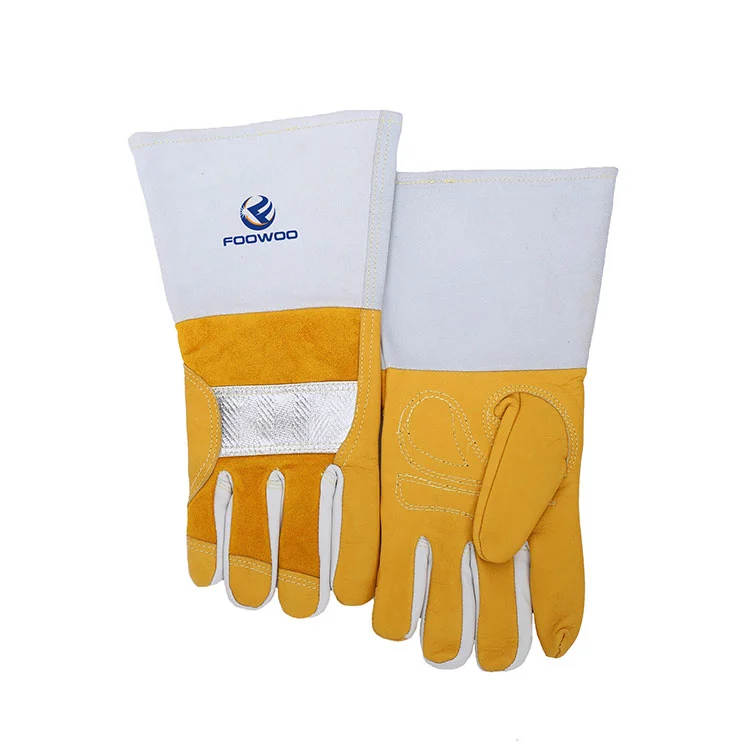
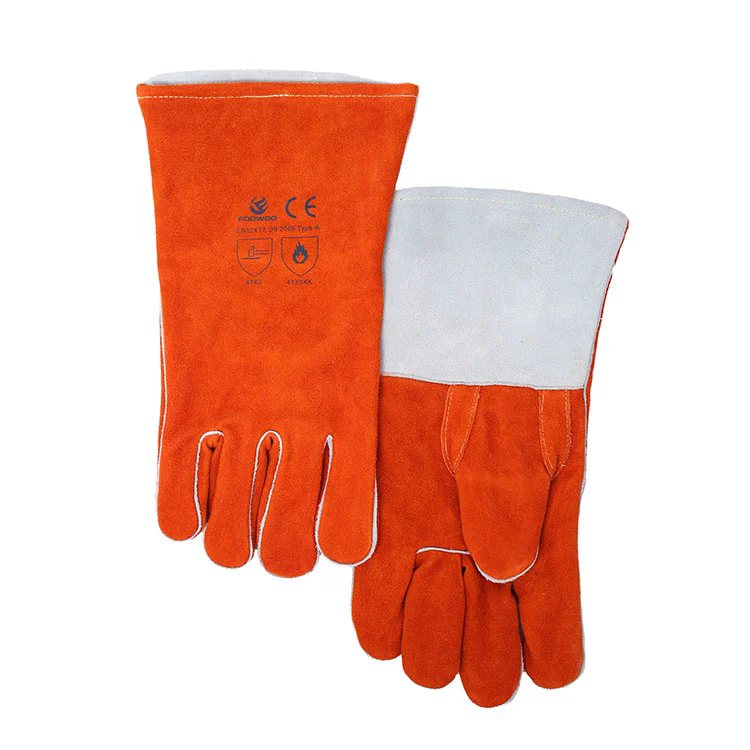
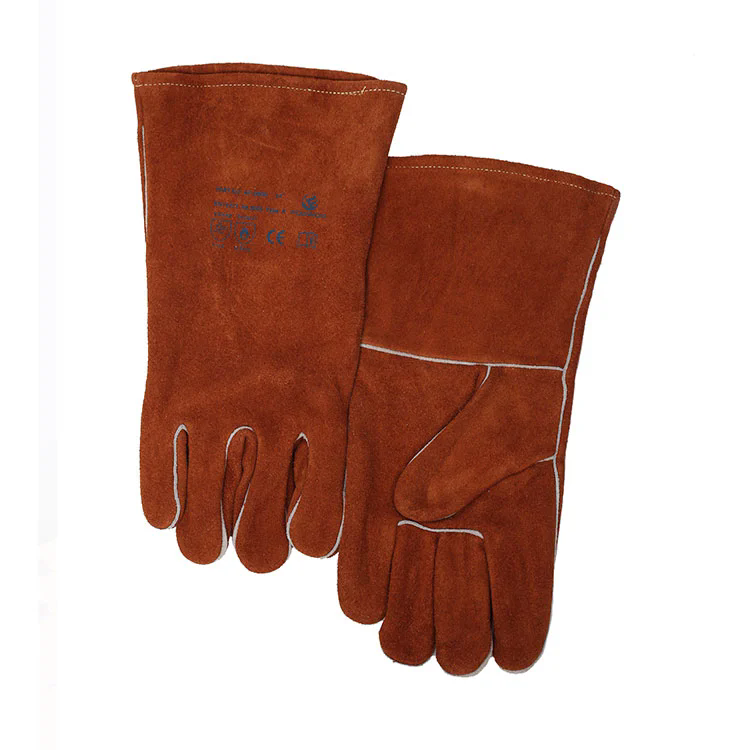
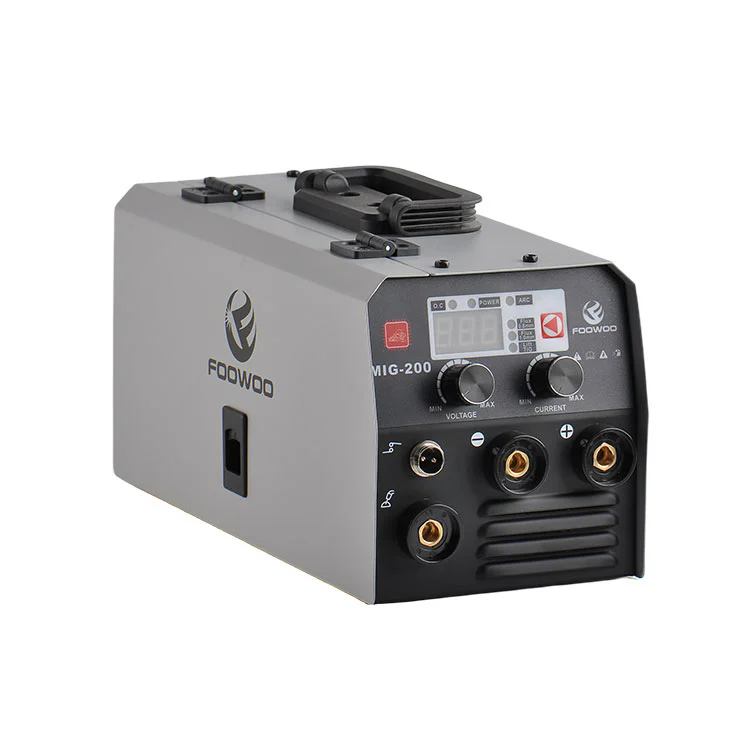
Welding Gloves, also known as welder's gloves, are specialized personal protective equipment specifically designed for welders. Their main function is to protect the hands from high temperatures, molten metals, and sparks. A good pair of welding gloves should possess the properties of being wear-resistant, cut-resistant, tear-resistant, fire-resistant, heat-conductivity-resistant, heat-airflow-resistant, and metal slag-resistant. At the same time, they should also be sensitive and comfortable to wear. Of course, a qualified pair of welding gloves should also have good insulation properties to prevent welders from getting electrocuted.
We classify welding gloves by their types, and they can be roughly divided into three categories:
1. TIG Welding Gloves: For TIG welding, the operation requires high flexibility. Therefore, the gloves are generally made of lightweight materials such as deer skin and goat skin. To ensure the flexibility of the hands, no inner lining is usually designed. This helps welders precisely control the welding gun.
2. MIG Welding Gloves: For this type of welding operation, both heat insulation and flexibility need to be considered. The gloves usually have added cotton or fleece on the palms and are equipped with extended wrist cuffs to protect the hands while preventing sparks from entering the cuffs.
3. Stick Welding Gloves: Manual welding generates a lot of heat and sparks. Because the gloves need strong heat resistance and spark resistance, thick and wear-resistant leather is generally used for production. An inner lining is included, and the palm area is reinforced. The cuffs are also extended to provide comprehensive protection for the hands and wrists.
Foowoo is a professional manufacturer and supplier of Welding Gloves in China. We have multiple production lines to manufacture various types of welding gloves. Welcome to come and consult or make a purchase!
Comparison Table of Applicable Scenarios for Different Leather Welding Gloves
| Leather Type | Core Features | Suitable Welding Types | Applicable Scene Characteristics | Pros and Cons Summary |
| Full-Grain Cowhide | Abrasion-resistant, tear-resistant, strong heat insulation, thick texture, long service life | Shielded Metal Arc Welding (SMAW) | Welding process generates much heat and heavy spatter, requiring high protection level | Pros: Top-level protection performance, durable; Cons: Slightly hard texture, average flexibility, relatively high price |
| Split Cowhide | Good toughness, excellent heat insulation, cost-effective | Regular Shielded Metal Arc Welding, Gas Metal Arc Welding (MIG) | Medium-intensity welding operations, requiring both protection and cost control | Pros: Balances protection and cost-effectiveness, wide application range; Cons: Abrasion resistance slightly lower than full-grain cowhide |
| Pigskin | Good air permeability, abrasion-resistant, tensile-resistant, affordable price | Light Shielded Metal Arc Welding, Short-time Spot Welding | Low welding intensity, short operation time, high requirement for air permeability | Pros: Breathable and comfortable, low price; Cons: Average heat insulation, not suitable for high-temperature and long-time welding |
| Deerskin / Goatskin | Soft and thin texture, sensitive touch, fits hands well | Gas Tungsten Arc Welding (TIG) | High requirement for operation precision, needing fine control of welding torch | Pros: Extremely high flexibility, no impact on fine operations; Cons: Poor abrasion and heat insulation, easy to damage |
| Sheepskin | Soft and fitting, high flexibility | Ultra-light Welding, Precision Welding | Low-heat, low-spatter fine welding operations | Pros: Comfortable to wear, no restriction on operation; Cons: Weak protection, only suitable for light scenarios |